
Quickly Set Up Your Projects with Custom Templates in zipBoard
Project templates in zipBoard let you start a new project with boards, statuses, and other workflow settings already set up. Pick a prebuilt industry template (Construction, Web Design, Learning Design, or Content Development) or, on Enterprise plans, a custom template exported from one of your own projects. This guide also answers common questions about editing, deleting, and sharing templates.
Setting up projects from scratch, and adjusting boards, tags, and statuses manually for each industry's workflow, slows down project kick-off. Templates remove that manual setup.
What are the custom project templates in zipBoard?
zipBoard's Custom Templates provide prebuilt templates for different industries. They are applied when you create a project, so your project is tailored to your industry from the start.
Available templates:
How templates help your team
- Streamlines project setup: Industry-specific templates save time by automatically applying relevant settings.
- Enhances collaboration: Get your team aligned and working faster without spending time on customization.
- Improves workflow: Project boards, tags, and statuses are set up to match your industry's needs.
- Increases productivity: Spend more time executing tasks and less time on setup.
How do I create a project from a template?
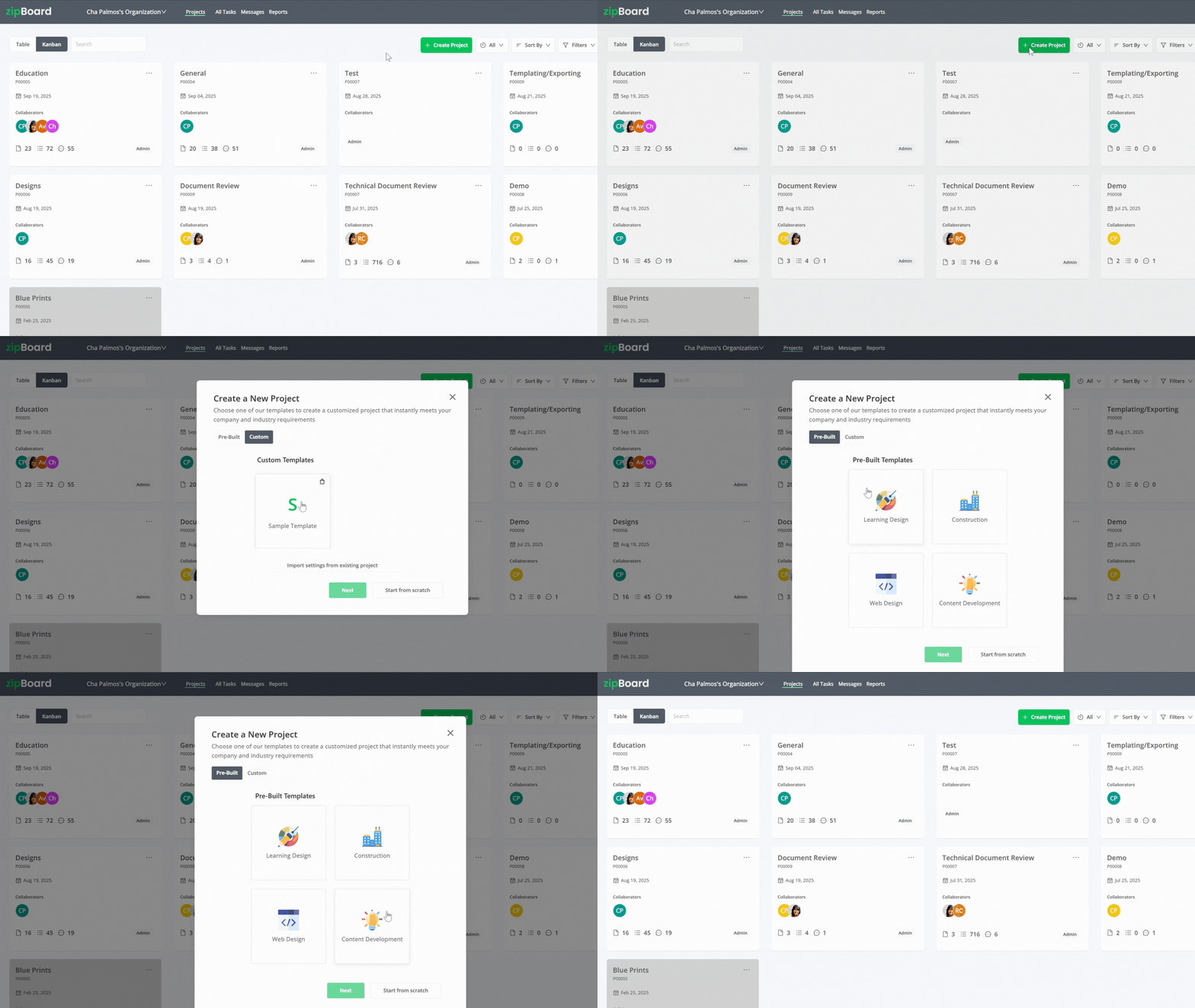
- Create a new project: Click Create Project. A Template Selection modal prompts you to select a template or create a project from scratch.
- Choose your template: Select a pre-made template from zipBoard (Construction, Web Design, Learning Design, or Content Development) or a custom template created by your organization.
- Preview the template: Before starting your project, click Read More to preview the template and see details about its setup.
- Apply the template: Proceed to create your project. The template's boards, tags, and statuses are applied automatically, so you can start collaborating right away.
If you're on a free trial, some customization options, such as changing the status or type, are limited unless you upgrade your plan. See the zipBoard Pricing FAQ for plan options.
What each prebuilt template includes
- Construction: Predefined boards like "Design Ideation" and "Permitting," plus types like "Change Order" and "RFI."
- Web Design: Boards like "Wireframing" and "User Validation," and statuses like "Ready for Development."
- Learning Design: Boards like "Analysis & Planning" and "Testing," plus document types like "Curriculum Documents."
- Content Development: Boards like "Draft Development" and "Editing," and types like "White Papers" and "API Documentation."
How do I create and manage custom project templates?
The Project Templating & Exporting feature lets your team save and reuse project structures you use often. Instead of setting up every new project from scratch, export an existing project's setup and turn it into a template.
Benefits:
- Faster project setup: No need to rebuild structures for every new project.
- Consistency: Standardized boards, statuses, and structures across all projects.
- Error reduction: Fewer mistakes from manual setup.
- Flexibility: Modify, chain, or delete templates as your needs evolve.
Who can create custom templates?
Custom templates (Project Templating & Exporting) are available only to Enterprise plan organizations.
To create custom templates, you must:
- Have organization edit permissions (Owner, Super Admin, or Admin).
- Be able to create projects within the organization.
If you do not have the correct role or permissions, you will not see:
- The Create Project button.
- Export options in the project card, table view, or project settings.
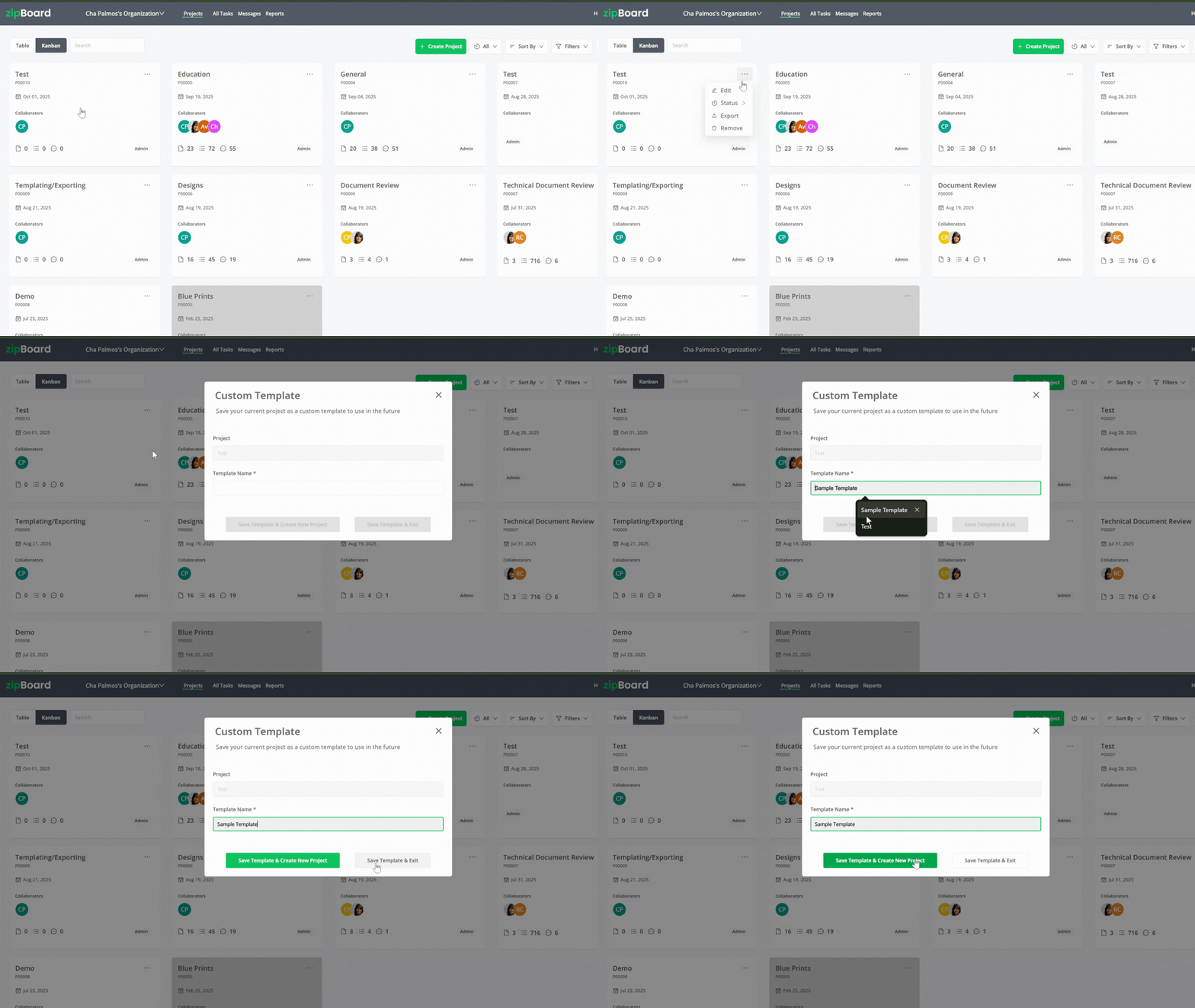
Export a template from Kanban view
- Go to your project explorer in Kanban view.
- Click Export on the project card.
- Save the exported template for reuse.
- Use the template to create a new project, and verify it matches the original.
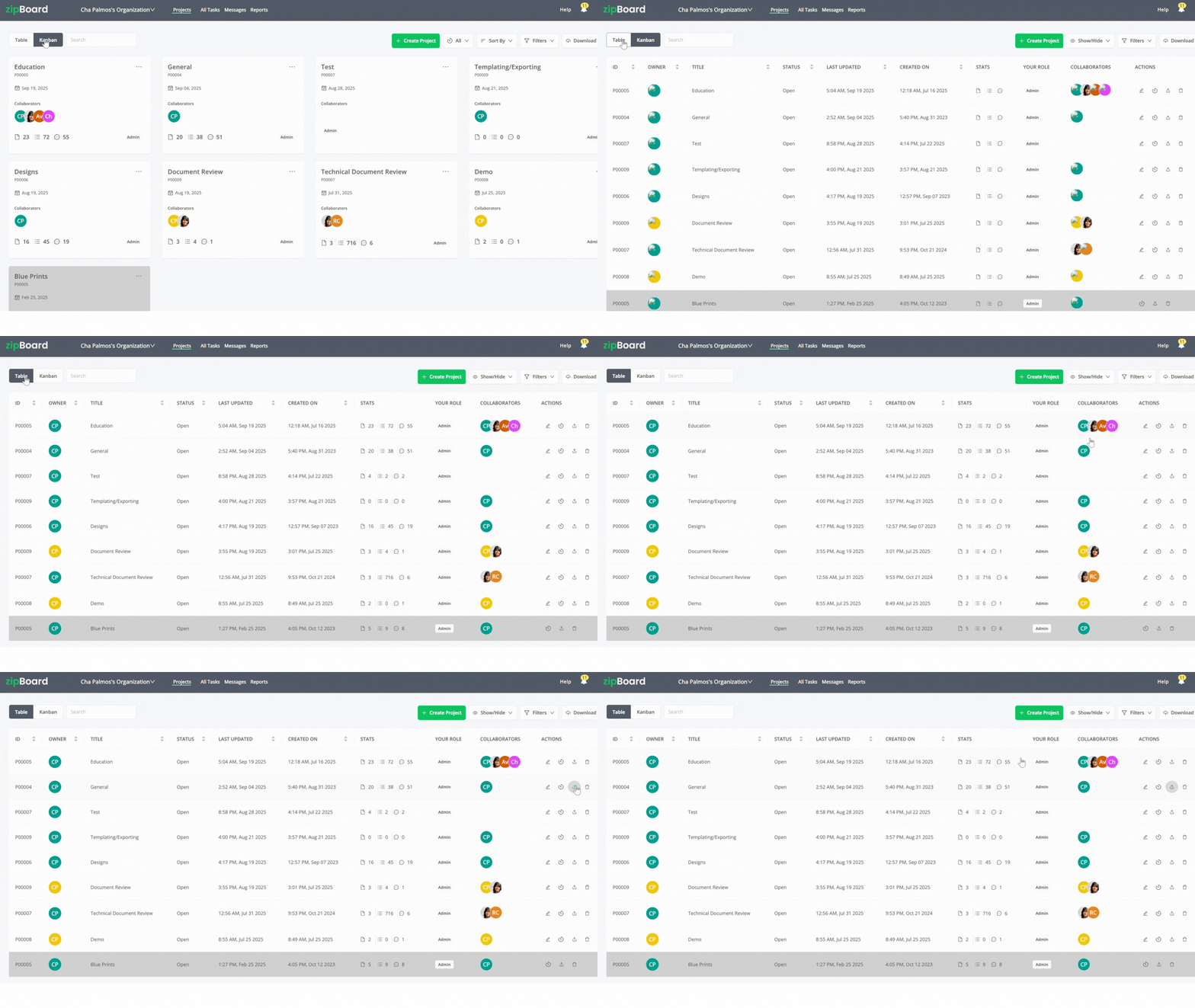
Export a template from Table view
- Switch to table view in the project explorer.
- Click Export next to the desired project.
- Follow the same process to reuse the template.
Chain exports
You can create new templates from projects that were themselves created from templates:
- Export Project A to create Template B.
- Modify Template B's boards, statuses, or types.
- Export the updated Template B to create Template C with the new settings.
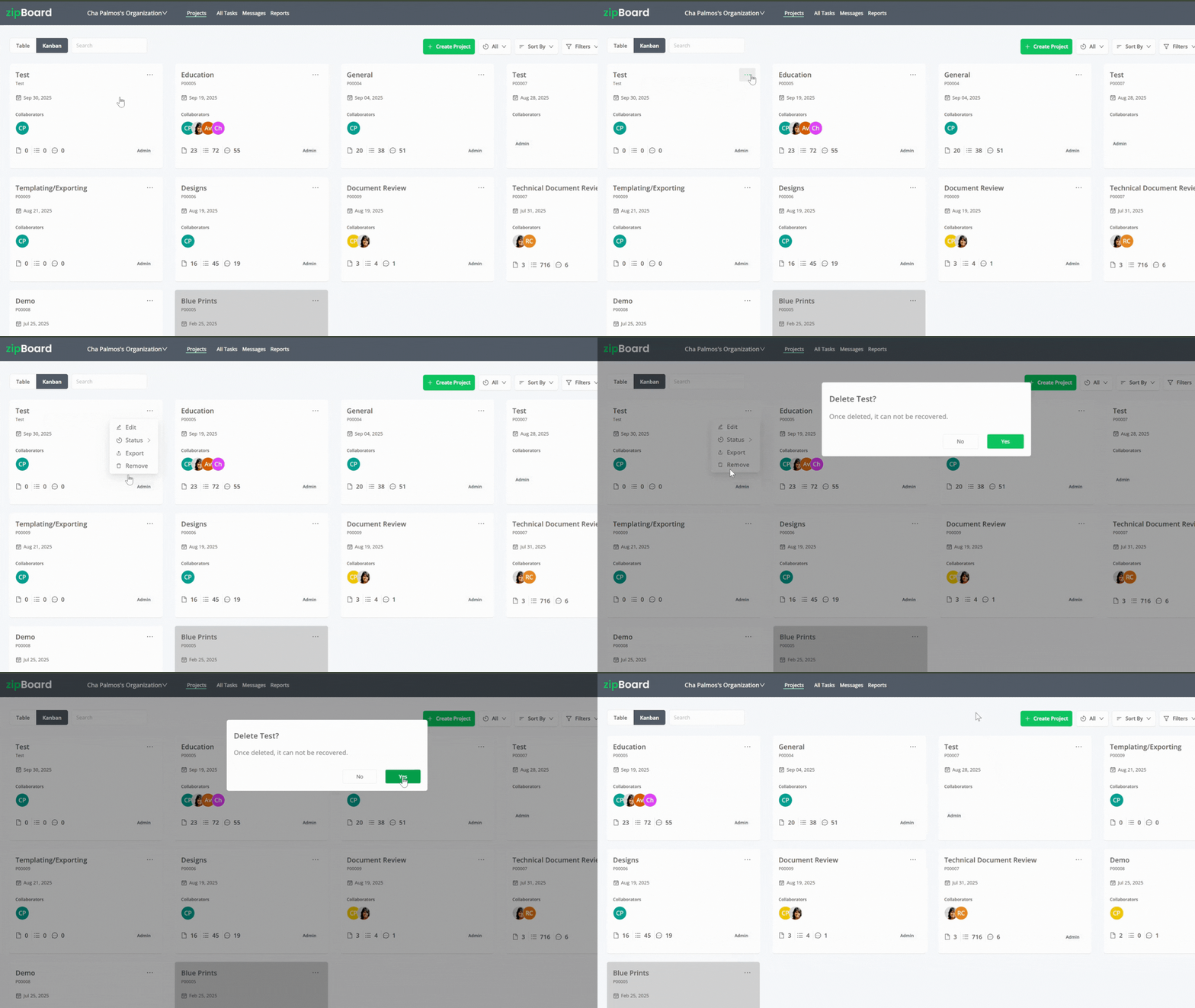
Delete a template
- Open the Template Management section.
- Select the template you no longer need.
- Click Delete. The template is removed from your organization's list.
Example custom template structures
Here are examples of structures different teams can save as custom templates:
| Team | Boards | Statuses | Tags | Types | Benefit |
|---|---|---|---|---|---|
| Construction | Planning & Permits, Foundation, Electrical, Finishing | Pending Approval, In Progress, Inspection, Completed | Compliance, Contractor, Safety | – | Maintain strict workflows and compliance across builds. |
| Creative agency | Discovery, Concept Development, Production, Review | Draft, Feedback, Revision, Approved | Client Name, Campaign, Priority | Design, Content, Asset | Consistent structure across multiple campaigns. |
| eLearning | Scripting, Storyboarding, Development, Deployment | Draft, Under Review, Ready for LMS | Module, Subject, Assessment | Lesson, Quiz, Resource | Speeds up course creation while keeping modules consistent. |
| Web projects | Requirements, Design, Development, Testing, Launch | Backlog, In Progress, QA, Live | Frontend, Backend, Bug, Feature | Page, Feature, Bug | A repeatable structure for collaboration across design, dev, and QA. |
Templates FAQ
Can templates include reviewers and roles, or only the project structure?
Templates save only the project structure: boards, statuses, and types. Reviewers, roles, and assignments are not carried over, so add them manually after you create the project.
If I change a template, do existing projects update too?
No. Updating a template does not change projects that were already created from it; only new projects created from the updated template get the changes.
For example, if you build Project 1 from Template A and then change Template A's boards, Project 1 stays the same, while new projects created from Template A use the updated structure. To bring an existing project in line with a new workflow, adjust it manually or create a new project from the updated template.
What happens if I delete a template that a live project uses?
Nothing changes for existing projects. Deleting a template only removes it from your template library, so it is no longer available for creating new projects.
For example, if Template A was used to create Project 1 and Project 2, both projects keep working normally after you delete Template A. Before deleting a template, check whether you still need it for future projects.
Can non-admins use templates once they are created?
Yes, non-admins can use templates to create new projects, as long as they have permission to create projects. Only organization Owners, Super Admins, and Admins can create, modify, or delete templates, which keeps project structures consistent across your organization.
Is there a limit on how many templates an organization can store?
No, there is no strict limit on how many templates you can create and store in zipBoard. To keep project setup fast and avoid using outdated structures, keep your template library organized and delete templates you no longer use.
How can I try project templates?
Start a 14-day free trial, or request a demo to see templates in action. For more updates, check the release notes.